CCTV DVR System or IP NVR System?
DVR is digital video recorder, supporting analogue video signal input. The DVR can compress, record, playback, internet access for the video signal. But the highest resolution only reach to 960H (928*576) or D1 (704*576).
NVR is network video recorder, NVR works with IP cameras, with function of recording compressed digital video signal, and local playback and video streaming. The resolution can support from QCIF to 1.3MP, 2MP, 3MP, 5MP…etc HD video signal.
Traditional DVR belongs to analogue front-end, security camera connects to DVR through coax cable with limitation of transmission distance, also easy to lose signal or effected by the interference, therefore it is not ideal solution for remotely surveillance. Nonetheless, NVR as IP network system, IP cameras connect to NVR can be using any IP address through Ethernet cable.
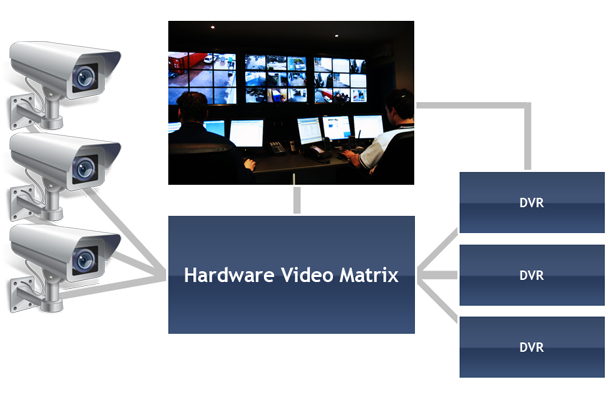
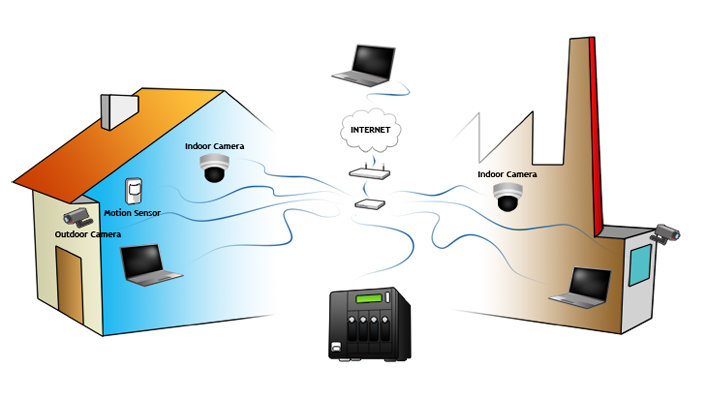
The difference between DVR and NVR
Plug and Play
For a long time, including NVR network equipment, with reason of need to config IP address and complexity of admin mangement platform, keeps many security contractors away from IP surveillance system. But now, using the DVR no longer need to config IP address, just need to plug the Ethernet cable and power on the system, it will automatically search the IP camera in network, then automatically distribute IP address.
Video storage
Powerful video recording and storage is one of factor for people like to use the DVR, however this function is still constrained by its analogue front-end; for example, DVR can not support front-end video storage, once there is problem on central equipment, the video surveillance system will not be able to receive video footage; At present, majority of NVRs can support three video storage methods including central storage, local storage (in IP cameras) and client storage. If the central can not recording, the system will automatically switch to local storage for backup video footage; From the storage capacity, NVR can be filled with high capacity HDD, with External HDD port, Ethernet port, USB port for extending unlimited storage space.
Security
Network product has been considered face with a security risk for a long time. In the absence of reliable intrusion protection, the network might be exposed to attack and intrusion. In nowadays IP surveillance system, once utilizing AES encryption for video streaming, user authentication, authorization and other security methods to ensure the security of IP surveillance systems. Now almost of NVR products can implement these security protection technology. In contrast, CCTV cameras transmit the video signal without any data encryption, which lead to easy to be illegally intercepted and once this happen, the video signal is very easy to be displayed in monitor.
Management
Centralized management is one of core advantages for NVR surveillance system, it can achieve centralized management for transmission line, transmission network, and front-end IP cameras, the system can monitor the status of each equipment, also browsing the parameter of equipment, nonetheless, CCTV camera connects to DVR in one way, transmission only contains video signal, therefore it’s impossible to monitor the front-end cameras.
In summary, DVR records from analogue video stream from analogue CCTV cameras, and NVR records digital video stream which has already been encoded at the IP cameras. Therefore, you will notice the DVR with many video/audio inputs, In contract an NVR only with Ethernet port for connecting into LAN or Internet. With reason of many limitations for the DVR, more and more security projects are deploy the NVR for advanced video surveillance system.
Tags: NVR system, DVR System